The Great Ownership Transfer

Coming of age during a time of economic growth and prosperity enabled the Baby Boomer generation to accumulate wealth and career accolades. As Baby Boomers hit retirement age and start contemplating their mortality, members of this savvy demographic are finding a creative solution to transfer generational wealth to their children.
Baby Boomers were born after World War II between 1946 and 1964. Since 2010, nearly 10,000 Baby Boomers per day hit the retirement age of 65, according to the U.S. Census Bureau. By 2030, one out of every five Americans will have reached the traditional age for retirement.
Baby Boomers hit their stride during a time of technological advancements, social change and economic growth. Characterized by their strong work ethic, high business acumen and competitive attitude, Baby Boomers thrived in corporate America. This resourceful generation diligently climbed the corporate ladder and placed a high priority on family. It’s not surprising that more than half of the United States’ wealth belongs to Baby Boomers. Baby Boomers have amassed $78.1 trillion in assets, according to Visual Capitalist.
The financial experts on Wall Street and politicians in Washington, D.C., have been strategizing ways to get a slice of this generational wealth for more than a decade. Politicians are proposing estate taxes and limits on gifting, and Wall Street is devising products aimed at providing solutions to keep the government at bay, creating an environment that’s ripe with opportunity for people who want to create a generational legacy.
I see an opportunity for Baby Boomers to help their children cope with economic headwinds now. The Great Ownership Transfer, where parents use their wealth to help fund a business, is sparking a movement and helping younger generations achieve their full potential in their prime. I see a path forward where one generation can help the next through Main Street business ownership. Not the glitzy overnight millionaires we read about in the news, but practical businesses you pass every day as you drive down the street in your hometown.
READ THE FULL ARTICLE ON FORBES

 About Your Career Revolution
Our mission is to help individuals explore self-sufficiency as an alternative career.
We help them define their Income, Lifestyle, Wealth, and Equity goals and provide education on the best ways to achieve them. We don’t sell franchises – we help people achieve their dreams of self-sufficiency through business ownership. The approach is different, the experience is different. And it works.
Order on AMAZON
Learn More About Career Ownership Coaching®
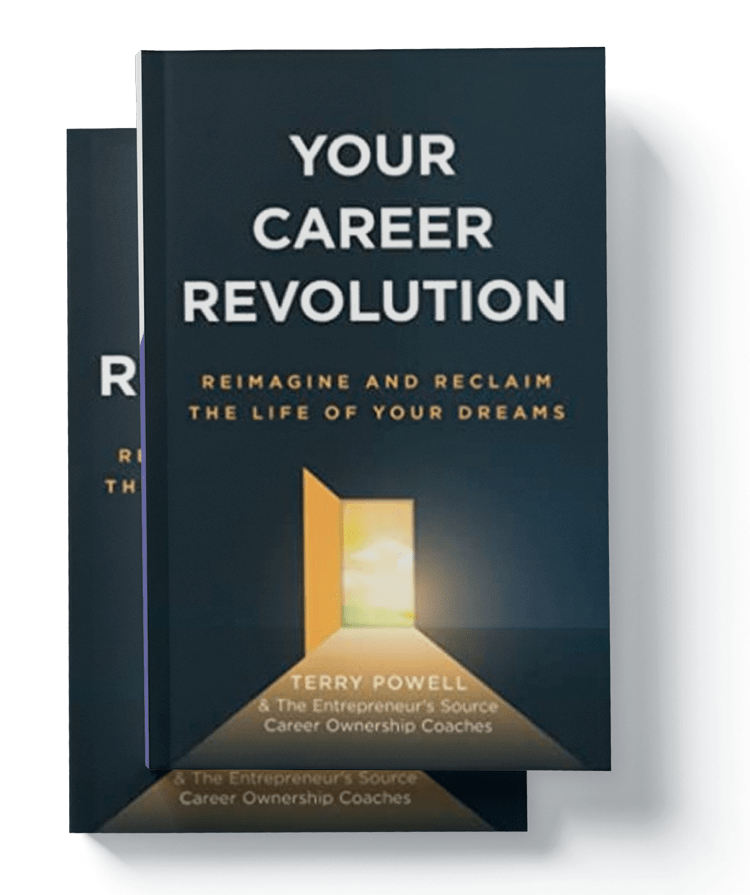
If you are considering a career change, invest in yourself to discover your options, possibilities, and dreams. Chat with one of our coaches to begin your career revolution. To learn more about Career Ownership Coaching®, visit www.entrepreneursource.com or check out our guidebook, “Your Career Revolution: Reimagine and Reclaim the Life of Your Dreams.”
Watch Episodes on YouTube or Listen as a Podcast and more!

















Share this post:
Related Posts
Your Trusted Resource for Career Ownership Coaching™ for helpful hints, best practices, anything related to career ownership.

The Great Demotion:
When Your Paycheck Stops Working for You How the shifting job market is shrinking careers — and what you can do about it. 1,600 job applications. 78 interviews. And after all that, the offer finally came — at half the pay and two steps down the ladder. For Scott, a professional profiled by Business Insider,…

Gas Prices are up and Job Security is Down!
Rising gas prices are adding pressure to an already unstable job market You’ve Already Felt It at the Pump. Now Watch for It at Work. You pull up to the gas station and wince. The numbers on that screen keep climbing. It feels personal — because it is. Fuel prices in North America have jumped…

The Future AI Workforce:
Which Jobs Are at Risk — and Who Can Actually Bounce Back. The Entrepreneur’s Source® | April 2026 You have probably felt it. A quiet unease at work. Fewer open positions on job boards. News stories about layoffs tied to artificial intelligence. Maybe you have even wondered: Is my job next? If you have asked…