
Your Loyalty Used to Protect You.

Now It Might Put a Target on Your Back.
 Are you approaching 10, 15, or even 20 years at your company. You have trained new employees and understood every process and its purpose. You expect your years of service would matter if layoffs happen.
But for many experienced professionals, that’s no longer true.
“Last in, first out” was once the norm. Now, more long-time employees are among the first to go when companies restructure. If you notice this happening, or it’s happening to you, it’s real. It doesn’t mean you failed. It means the rules have changed.
Let’s explore what’s happening and what you can do about it.
The Numbers Behind the Feeling
This isn’t just a feeling. A ProPublica and Urban Institute analysis of the Health and Retirement Study found that 56% of older workers are laid off at least once, or pushed out of long-held jobs, before they retire. Only one in ten ever earns as much again.
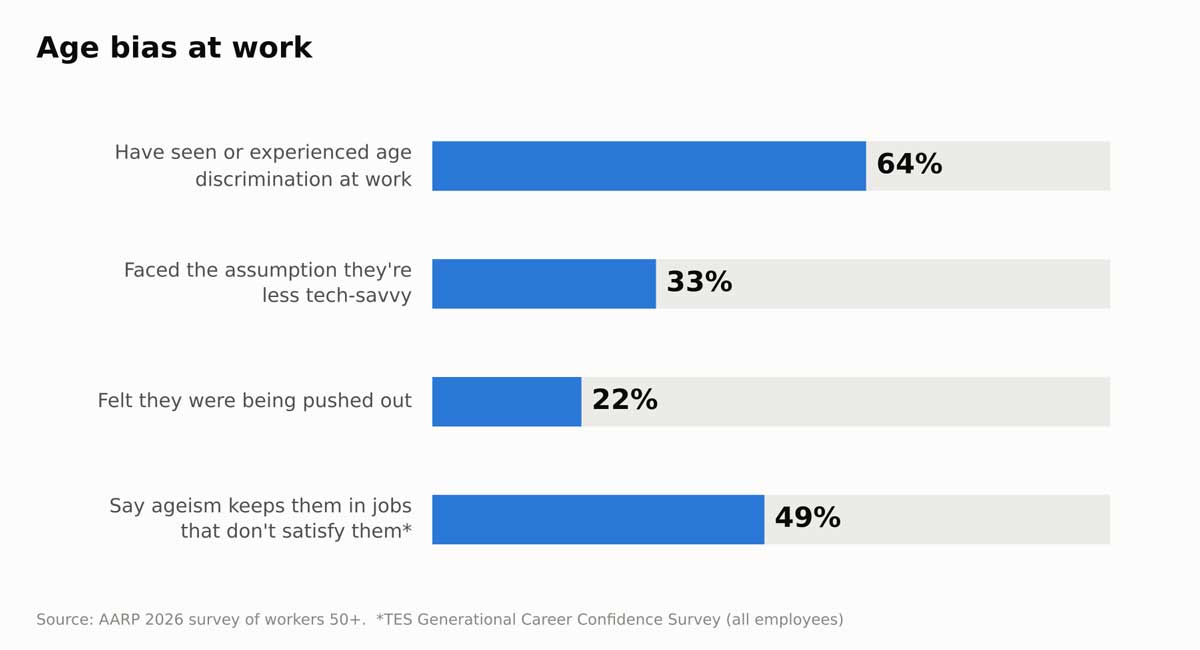
Age bias is also a factor. In AARP’s 2026 survey of workers 50 and older, 64% said they had seen or experienced age discrimination at work. About 22% felt they were being pushed out.
The TES Generational Career Confidence Survey found that 49% of employees say workplace ageism keeps them in jobs that don’t satisfy them.
That number is important. Many people stay in their jobs not because they’re happy, but because they’re worried about what’s next.
Seven Reasons Long-Time Workers Are Being Let Go
Here’s what’s behind this trend. Some reasons are about business costs, while others are based on assumptions. Knowing the difference can help you plan.
- You may cost more. Years of raises, extra paid time off, and better benefits make long-time employees a bigger expense. When companies need to cut costs, they often start with the highest salaries.
- Some bosses assume you won’t use AI. Many managers think experienced workers are slow to learn new tools, though that’s often not true. Still, AARP found that 33% of workers 50 and older have faced the assumption that they’re less tech-savvy. This stereotype can be harmful even when it’s not accurate.
- There’s also a belief that you won’t learn new technology. This is similar to the AI stereotype. Some companies skip training older staff, then blame them for a skills gap the company created.
- Companies may think someone cheaper can do the job. A new hire might do the same work for less pay, which looks like savings on paper. The loss of experience often isn’t noticed until later.
- Many jobs now favor generalists. Roles are being changed to cover more tasks. Companies may replace specialists with people who can do a bit of everything, often using AI.
- AI is changing company structures. Companies use AI to reduce middle management, and those jobs are often held by people in their 40s and 50s. Some call this the Great Demotion, but the result is the same.
- Institutional knowledge is often ignored. You understand why things are done a certain way, but that knowledge isn’t reflected in budgets. It’s easy to cut, but companies often pay for it later by repeating mistakes.
Why “Just Work Harder” Isn’t the Whole Answer
The common advice is to stay up to date, learn AI, and show your value. That’s useful, and you should do it. But it assumes your future depends on someone else deciding you’re worth keeping.
Most of these seven reasons aren’t about your job performance. They’re about cost, company structure, and bias. You can do great work and still be affected.
That’s why many experienced professionals are asking a bigger question. Instead of “How do I keep this job?” they’re asking, “How do I build a career that no one else can take away?”
Your Experience Is an Asset When You Own It
 Here’s the good news: the qualities that make you seem “expensive” to an employer can make you valuable as a business owner.
Consider your strengths. You understand teamwork, have led others, solved tough problems, and earned customer trust. These skills don’t disappear at 50. In Career Ownership, they become the base for something you control.
You’re not alone in thinking this way. In the TES Generational Career Confidence Survey, 83% of Americans said business ownership is a viable alternative to a traditional career. And 66% said ownership offers more job security.
Career Ownership doesn’t mean giving up what you’ve built. It means using your experience for your own benefit, not just for someone else’s bottom line.
Protect Yourself While You Still Have the Job
Making big career changes can feel risky, especially later in your career. You might have a mortgage, kids in college, or retirement coming up. That’s why it’s important not to make this decision alone.
A Career Ownership Coach® acts as a guide, not a salesperson. Career Ownership Coaching™ begins with your goals, not with selling a product. A coach can help you:what you want. How much do you need to earn? How do you want to spend your days? What wealth do you want to build? What do you want to own when you’re done?
- Take an honest look at your skills, savings, and risk tolerance.
- Explore options you may not know exist and rule out the ones that don’t fit.
- Ask the right questions and do real research before you commit.
The goal isn’t to push you into business ownership. It’s to help you make a confident, informed decision, whatever you choose. Some people find ownership is right for them. Others leave with clarity and a plan for their next step. Either way, you stop waiting for someone else to decide your future.
Start With an Honest Look at Your Risk
 You can’t control if your company restructures, but you can control how prepared you are if it happens.
A good first step is The Entrepreneur’s Source® Career Threats Assessment. It examines the pressures that affect long-time workers most: automation risk, how up-to-date your skills are, age and other biases, your network strength, and how vulnerable you’d be if your paycheck stopped. In just a few minutes, you’ll see if you’re In Control, On Alert, or In Danger.
Next, talk with a Career Ownership Coach®. Bring your results, your questions, and your years of experience. Your experience is still valuable. The key is making sure you benefit from it.
Your loyalty helped build another company. Now, your next chapter can build your own.
Take the Career Threats Assessment
About Your Career Revolution
Our mission is to help individuals explore self-sufficiency as an alternative career.
We help them define their Income, Lifestyle, Wealth, and Equity goals and provide education on the best ways to achieve them. We don’t sell franchises – we help people achieve their dreams of self-sufficiency through business ownership. The approach is different, the experience is different. And it works.
Order on AMAZON
Learn More About Career Ownership Coaching™
If you are considering a career change, invest in yourself to discover your options, possibilities, and dreams. Chat with one of our coaches to begin your career revolution. To learn more about Career Ownership Coaching™, visit www.entrepreneursource.com or check out our guidebook, “Your Career Revolution: Reimagine and Reclaim the Life of Your Dreams.”
Watch Episodes on YouTube or Listen as a Podcast and more!
















Share this post:
Related Posts
Your Trusted Resource for Career Ownership Coaching™ for helpful hints, best practices, anything related to career ownership.

The Unemployment Rate Isn’t Telling the Truth
You have heard the headlines. Unemployment is around 4%. Economists call it "full employment." The job market, we are told, is strong. So why does your job search drag on for months?

After the Layoff
It usually begins the same way. You get a calendar invite with no details. Your manager avoids eye contact on the video call. Then you hear the words that suddenly make your career part of your past.

Rest alone won’t solve burnout if your job is the real issue.
You finally took a break. Maybe it was a long vacation, take some time between jobs, or even a full career pause. You caught up on sleep, unplugged, and started to feel like yourself again. But once you returned to work, the exhaustion crept back in within just a few weeks.