
The Entrepreneur’s Source Franchise on Why Entrepreneurship Can Help Veterans Get Back Into The Workforce
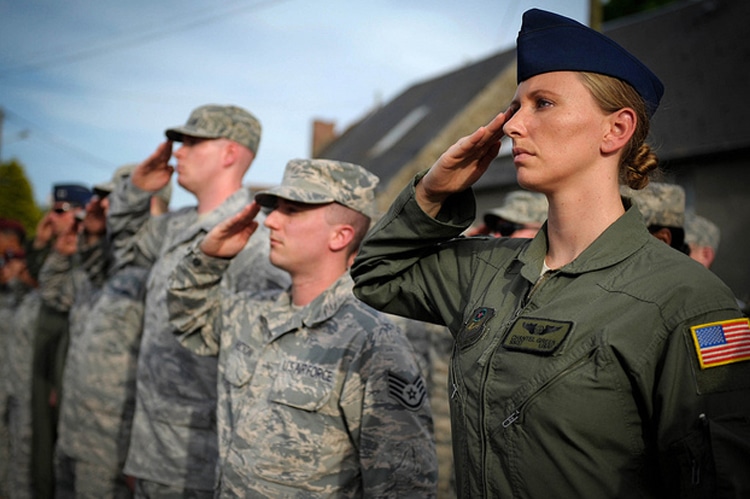
Franchise Friday host Brendan Major was recently joined by United States Army veteran, advocate and author, Michael Kaplan, to talk about veterans and entrepreneurship. Kaplan discussed why he believes veterans are uniquely suited for the entrepreneurial path due to the particular skills they acquired during their military career. The Entrepreneur’s Source franchise outlines how their sense of autonomy and self-initiation prove that they are highly capable of being successful American citizens in the business world.
More About Michael Kaplan
Michael is a passionate advocate for military veterans who are transitioning into the civilian workforce. He works as a mentor with numerous academic and corporate organizations serving that cause. He is the author of the book “The Prior Service Entrepreneur: Providing Military Veterans with the Competitive Skills to Start a Successful Business,” which currently has a five-star rating on Amazon. He also regularly writes and publishes articles and special interest stories for veteran organizations and advocacy group of blogs and newsletters.
He has a very extensive professional background, which includes government training with a very strong track record of business development and entrepreneurship – very important in today’s climate as veterans are not getting access to all the things they need.
The Veteran Employment Situation
There are currently a little over 1.4 million Americans on enlisted in active duty or officer status in the United States military, according to the U.S. Department of Defense. While some of these individuals make careers out of serving in the military, for many others their time serving is a short-term job before they join the American workforce. A recent report by the U.S. Department of Defense states that at the end of 2013, there were 21.4 million veterans in the United States, or 9 percent of the American population. However, of these veterans who have served on active duty any time after September 11, 2001, about 9 percent of them were unemployed – higher than the unemployment rate for all U.S. veterans which stands at 6.6 percent. These recent veterans are discovering that it is harder to find jobs after serving in the military for a variety of factors ranging from a higher rate of disability, a lack of prior civilian work experience and complex licensing requirements.
Because of these hurdles standing in the way of individuals who were brave enough to fight for our country trying to enter the job market, Kaplan has made it his mission to educate veterans about the transferrable skills they have acquired while in the military and how these skills can be effectively translated into the entrepreneurial industry.
“I think the veterans are uniquely suited for an entrepreneurial path given their particular skill set,” Kaplan said. “I try to convey that to veterans to get them to build that sense of autonomy, self-initiation and show that they’re actually uniquely suited to be highly successful in the civilian world.”
Why Veterans are Suited for Entrepreneurship
Kaplan’s unique stance on veteran unemployment distinctively focuses on entrepreneurship as opposed to just the corporate world or typical employment in general. He divides his logic into a three main factors of why veterans are more fit for the entrepreneurial world than the corporate sector.
1. Economical: Michael explained that the economic component is mainly based on the constricting U.S. economy and the reality of real unemployment. Although the economy has shown signs of stability, he explained, there are no clear cut signs that there is going to be a boom in it anytime soon.
“I understand that there’s some upticks in the unemployment numbers or the jobs creation numbers, but those aren’t the jobs the veterans really want to be going after, anyway,” he said. “From an economic perspective, I think by necessity, people are going to have to start really getting involved in creating that entrepreneurial small business if they want a sustainable lifestyle going forward.”
2. Political: It’s almost impossible to deny the fact that America has been experiencing political gridlock for the past few years, Michael explained.
“I expect gridlock over the next two years if Republicans take back the Senate,” he said. “Typically, Republican administrations downgrade the size of the government. That puts more people into the civilian workforce. They also promote small business, so it’s a great opportunity for veterans to get involved at that level.
3. Practical: Practically speaking, veterans aren’t the only population in America that are experiencing unemployment. Even people that are fully in America and fully employed don’t have a guarantee that their jobs will remain intact.
“In the New York Post today, it was reported that 1,100 captains in Afghanistan just got a pink slip saying that when they came back to the States – their commissions were being retired,” Michael said. “They’re out in the combat zone right now, and they got pink slips. That’s why I focus on the entrepreneurial piece.”
For more about Michael Kaplan’s thoughts about why he believes veterans are well suited for the entrepreneurial path, listen to the rest of the Franchise Friday podcast, brought to you by The Entrepreneur’s Source franchise. Don’t forget to tune into Franchise Friday every Friday at 10 A.M. ET and follow us on Twitter @FranchisefridayShow and participate by using the hashtag #franchisefriday.
Share this post:
Related Posts
Your Trusted Resource for Career Ownership Coaching™ for helpful hints, best practices, anything related to career ownership.

The Unemployment Rate Isn’t Telling the Truth
You have heard the headlines. Unemployment is around 4%. Economists call it "full employment." The job market, we are told, is strong. So why does your job search drag on for months?

After the Layoff
It usually begins the same way. You get a calendar invite with no details. Your manager avoids eye contact on the video call. Then you hear the words that suddenly make your career part of your past.

Rest alone won’t solve burnout if your job is the real issue.
You finally took a break. Maybe it was a long vacation, take some time between jobs, or even a full career pause. You caught up on sleep, unplugged, and started to feel like yourself again. But once you returned to work, the exhaustion crept back in within just a few weeks.